Scaling Transfer Transparency
Institutional Experiences with Transfer Explorer
Executive summary
Transfer students often struggle to understand whether prior coursework will transfer to a new institution and how those credits will apply toward a specific degree. ITHAKA developed the national version of Transfer Explorer to make this information more transparent. Building on CUNY Transfer Explorer, the publicly accessible platform draws directly from participating institutions’ course equivalencies and program requirements to show students, advisors, and staff how specific courses and other validated learning may transfer and apply toward a degree.
This report examines the implementation of Transfer Explorer at pilot institutions in Connecticut, South Carolina, and Washington’s, drawing primarily on interviews with stakeholders at seven participating colleges and universities and website analytics. Overall, interviewees viewed the tool positively, citing its potential to provide clearer transfer information, reduce manual work, and support more informed student decision-making. They also emphasized that implementation remained a work in progress and that the tool’s usefulness depends partly on the participation of relevant transfer partners.
Five key lessons emerged from this research:
- Technical launch and meaningful implementation are distinct milestones. Institutions moved through implementation at different rates, and making institutional data publicly available did not mean that the tool had been fully integrated into advising, admissions, communications, or other student-facing processes. Website analytics similarly show a substantial lag between the platform’s initial launch and sustained use, though this lag seems to have been reduced for more recent participating institutions.
- Transfer Explorer’s ability to show how credits apply toward specific degrees is particularly valued. Interviewees appreciated how this information can help both the prospective students making transfer decisions and the staff advising them.
- Transfer Explorer’s accuracy and usefulness depends on the institutional data, policies, and practices underlying the tool. Complex degree requirements and institution-specific transfer rules can be difficult to represent through a common interface, while imperfect institutional data (such as outdated equivalencies or informal exceptions that have never been formally documented) can further limit the information available to users.
- The steps institutions take to bring Transfer Explorer to their campuses can themselves strengthen institutional transfer practices and data quality. Preparing information for public display prompted some institutions to update transfer data, review longstanding equivalencies, and formally document practices that had previously relied on institutional or advisor knowledge.
- The more institutions that participate, the more useful Transfer Explorer becomes. The inclusion of a large number of possible transfer partner institutions, especially those representing the highest-volume transfer pathways, was especially important to institutions interested in transfer-out advising. Expanding participation broadens the pathways students can explore and, in turn, increases the value of participation for other institutions.
Pilot institutions also had three critical recommendations for other colleges and universities considering Transfer Explorer:
- Prepare transfer data and policies for public display. Reviewing course equivalencies, program requirements, and related policies early can make onboarding smoother and reveal gaps requiring institutional attention.
- Identify key stakeholders and build internal ownership early. Successful implementation requires collaboration across multiple offices, including registrars and records staff, IT, advising, admissions, academic affairs, institutional leadership, and communications. Institutions benefit from having a clear implementation lead while ensuring that knowledge and responsibility extend beyond a single individual.
- Establish how Transfer Explorer fits into the institution’s broader transfer strategy. Institutions should identify the audiences and workflows the tool will support and how it will complement existing transfer resources.
These findings reflect an early stage of institutional implementation rather than an assessment of Transfer Explorer’s long-term impact. They nevertheless demonstrate that scaling transfer transparency requires more than making a technical platform available. Moving from launch to meaningful use also requires institutional preparation, integration into transfer processes, and a growing network of participating colleges and universities.
Introduction
Transfer plays an increasingly important role in American higher education, with 13 percent of all continuing and returning students being transfer students, a percentage that is growing.[1] Yet understanding how previously earned credits will transfer and apply toward a degree can be difficult to pin down for both students and the people who support them. Credit transfer decisions depend on institutional policies, articulation agreements, degree requirements, accreditation standards, and continuously evolving curricula, making it challenging for students, advisors, and staff to obtain timely and accurate information before enrollment. These challenges can contribute to unnecessary coursework, delayed degree completion, and uncertainty throughout the transfer process.
Understanding how previously earned credits will transfer and apply toward a degree can be difficult to pin down for both students and the people who support them.
ITHAKA developed Transfer Explorer to improve the transparency of credit mobility by providing students, advisors, and institutional staff with a publicly accessible tool for exploring how coursework transfers and applies to degree requirements at participating colleges and universities. Building on the success of CUNY Transfer Explorer (T-Rex), the national version of Transfer Explorer operates across diverse institutional systems while drawing directly from participating institutions’ records of transfer equivalencies and degree requirements.[2] Users can create “explorations” by entering completed or planned coursework, selecting a destination institution and academic program, and viewing how those credits are expected to transfer and apply toward degree requirements. The platform also lets users save and revisit explorations, as well as access institution-specific transfer information through a common interface. The design, development, onboarding, and initial launch of the national platform are described in greater detail in the companion report, From Concept to Campus.[3]
This report examines the next phase of the project: the initial implementation across several colleges and universities. This report explores how participating institutions experienced onboarding and rollout, how they incorporated Transfer Explorer into existing transfer processes, what benefits and challenges they identified, and whether and how implementation has influenced institutional policies and practices. The findings draw primarily on interviews with institutional stakeholders conducted during November 2025 through January 2026 and are complemented by website analytics that provide additional context about the platform’s early adoption. (For more information on our methodology, please see the appendix.) The report concludes with recommendations, followed by a discussion of the broader implications of early adoption for advancing transfer transparency nationwide.
Transfer Explorer’s history and timeline
As detailed in the companion report, efforts to onboard pilot institutions into Transfer Explorer began in earnest in late 2023 and culminated in an initial public launch of the Transfer Explorer in February 2025 with three destination institutions. Following this public launch, however, implementation unfolded gradually across participating institutions. Website analytics indicate that use increased steadily during the platform’s first year before accelerating during spring 2026 (Figure 1), with noticeable dips during traditional winter and summer academic breaks. Since its initial launch, the production site has served more than 8,000 unique users as of this publication.
Figure 1: Growth in Transfer Explorer usage since launch
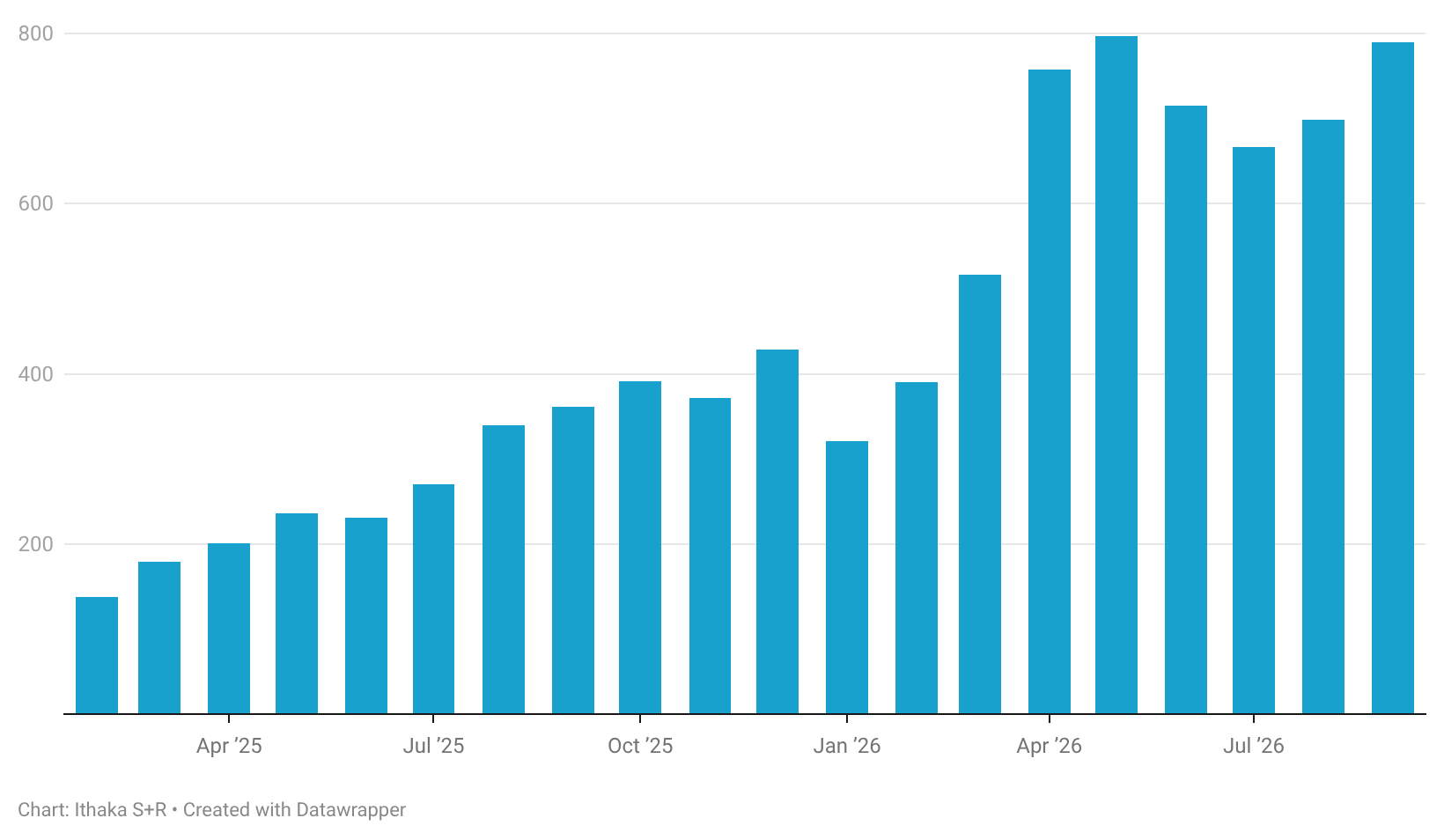
The x-axis represents the months since the February 2025 launch of Transfer Explorer. Because a three-month rolling average was not yet available, the bar represents the one-month average for month zero and the two-month rolling average for month one.
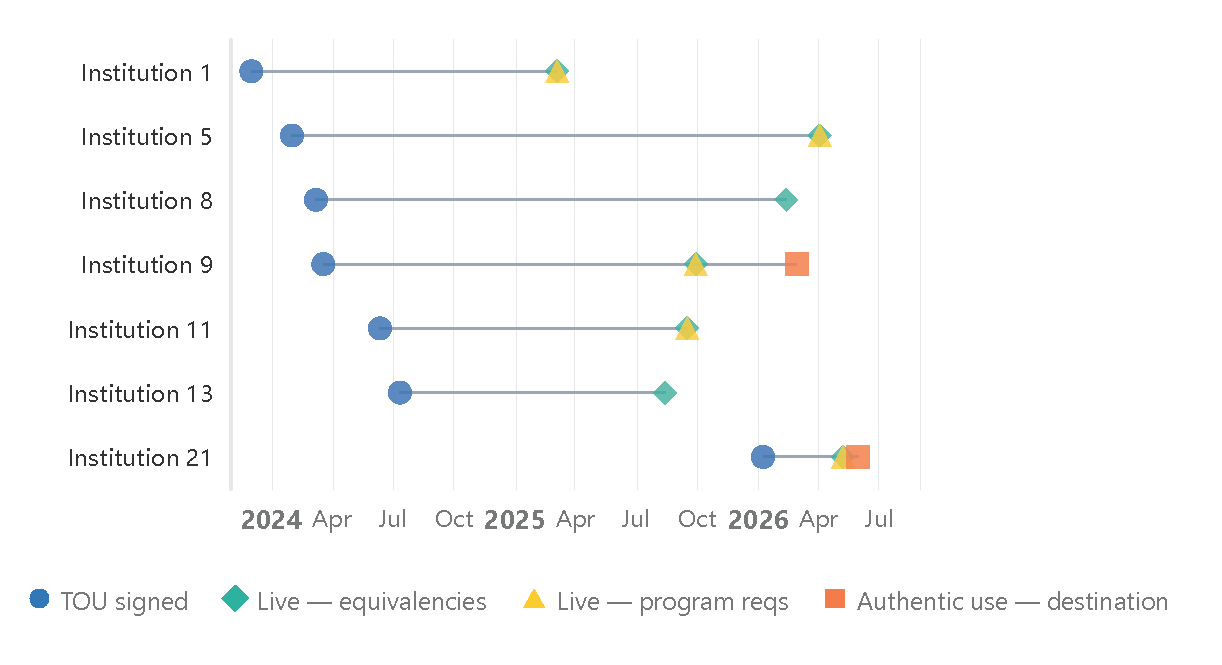
In general, a participating institution is considered to have “launched” Transfer Explorer when it is available as a destination institution within the public tool. To get to that point, institutions generally go through a process that includes signing a Terms of Use (TOU) contract, supplying data, verifying those data, and then launching information for either course equivalencies alone or course equivalencies as well as program requirements. Following launch, it may then take some time for the institution to integrate the tool into their regular operations with students who are seeking to transfer in or out. In practice, institutions hit these milestones on substantially differing timelines, with delays occurring for reasons as varied as staff capacity, taking time to thoroughly validate data before approving it for public use, and hesitance to promote the tool until there was greater system-wide participation. At the time we conducted interviews, participating institutions were at a range of implementation stages: some had accumulated several months of meaningful student use, while others were still validating data, planning communications, or preparing for broader rollout. This variation provides important context for interpreting the findings presented throughout the report.
Website analytics suggest that sustained authentic use developed more gradually than formal launch alone might imply. For the purposes of this report, we estimated the onset of substantial authentic use as the first month in which an institution recorded at least 10 explorations from non-bot, non-internal users with that institution selected as the destination, followed by sustained or increased activity levels over subsequent months. Using this measure, no institutions demonstrated sustained authentic use prior to fall 2025, despite several having already launched on the public site. Out of the 21 institutions that had launched as of August 2026, 12 (57 percent) had met the sustained authentic use threshold. The difference was particularly stark by type of institution: 10 out of 14 launched institutions that primarily award bachelor’s degrees or above (71 percent) had met the authentic use threshold compared to only two out of seven (29 percent) of the community and technical colleges.[4] Figures 2 and 3 visualize the range of institutional milestone timelines from TOU contract signing to launch to, if applicable, authentic use. These visualizations demonstrate the wide variation in implementation timing at each stage of the process: some institutions are able to quickly move to the next stage, while others encounter delays.
Figure 2: Institutional milestone timelines: primarily bachelor’s degree granting institutions[5]
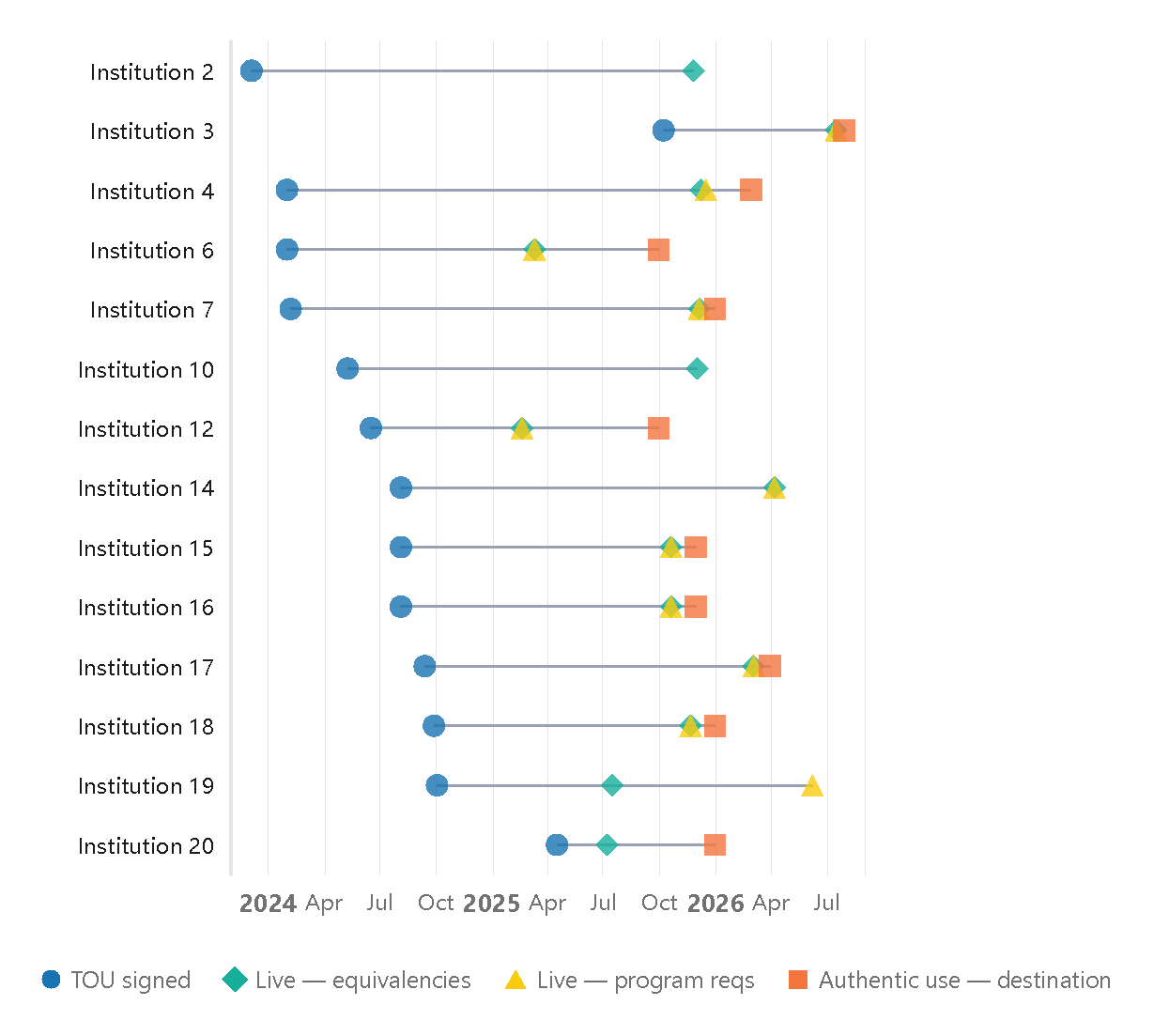
Figure 3: Institutional milestone timeline: community and technical colleges
Findings
Positioning Transfer Explorer within institutional transfer contexts
Institutional stakeholders described participating in Transfer Explorer with the hope that it could make transfer processes more transparent and easier to navigate while supporting broader institutional goals related to student success and degree completion. Although priorities varied across institutions, interviewees commonly emphasized maximizing students’ prior credits, reducing repeated coursework, supporting efficient time-to-degree, and building clearer pathways across institutions. For some institutions, this meant strengthening their role as a transfer destination; for others, it meant improving transfer advising, systemwide consistency, or policies related to non-traditional credit. Across the board, institutions shared a broader goal of making transfer more transparent, predictable, and straightforward for students as they plan their academic pathways. One institutional lead from a two-year institution explained that Transfer Explorer aligned with efforts to improve transparency for prospective transfer students by helping them understand “how those credits come into us” and “how those classes kind of crosswalk or map into the courses that we offer here.”
Across the board, institutions shared a broader goal of making transfer more transparent, predictable, and straightforward for students as they plan their academic pathways.
However, interviewees also described institutional and informational barriers that can make these transfer goals difficult to achieve. Transfer credit evaluation can require substantial time and coordination, particularly when institutions must review unfamiliar coursework, consult faculty, or evaluate non-traditional credit. Even when transfer pathways exist, students frequently struggle to distinguish between whether credits will transfer at all versus how they apply toward a degree. Advisors described transfer-out advising as particularly challenging because it’s nearly impossible for an individual to know how courses completed at dozens of colleges will apply across multiple destination institutions and degree programs. These advisors often relied on a variety of sources, such as institutional websites, articulation agreements, partner contacts, or registrar consultation, but still struggled to determine how another institution would ultimately “count” transferred coursework. As one advisor explained, “there’s always a caveat” because curriculum changes, substitutions, and institutional policies may change over time, making it necessary to combine available resources with direct communication between students and receiving institutions. Interviewees also described transfer information as fragmented and difficult to access, creating uncertainty for students who may not know which courses to take, how transfer agreements apply to them, or what documentation is required for different forms of prior learning.
Because transfer work depends on multiple offices, systems, and policies, these conditions also shaped how institutions approached adopting Transfer Explorer. Registrar offices and student information systems provide much of the underlying infrastructure for transfer evaluation, but as interviewees emphasized, transfer also depends on ongoing maintenance of course equivalencies, faculty review of new coursework, and coordination across offices and partner institutions. These institutional realities influenced both how institutions implemented Transfer Explorer and how they envisioned incorporating the tool into their existing transfer practices.
Institutional engagement with Transfer Explorer
ITHAKA developed Transfer Explorer to support postsecondary systems and institutions in addressing these transfer challenges. Pilot institutions generally engaged with Transfer Explorer in phases: first, institutions formally joined the Transfer Explorer pilot; next, they supported the Transfer Explorer team in ingesting that institution’s course, course equivalency, and program requirement data into the tool and subsequently validated those data; and finally, they launched Transfer Explorer and navigated campus implementation (sometimes including training, incorporation of the tool into transfer processes, and communication and marketing).
Joining the Transfer Explorer pilot
When ITHAKA first launched the Transfer Explorer project, it was seeking a single state with interested institutions to participate in the pilot. However, Connecticut, South Carolina, and Washington were all strong candidates and chose to sign on. Conversations around the pilot started at the state and system levels, and 10 institutions received grant funding to participate in the initial phase of the project.
Though institutional leaders were generally included in conversations around participation, the leaders and staff carrying out the work to onboard their institutions to Transfer Explorer were often not involved from the beginning. As one registrar described:
During one of those conversations, [our institution] stepped up to say, hey, we’ll be one of the pilot institutions. We’ll try it out. And then, after that conversation, [I was told] this is the idea of what we want to do. So that’s how I got involved. But I believe there was a conversation that happened a bit above me first.
In some cases, this meant that the onboarding timeline was not necessarily ideal for the individual institutions. The same registrar noted that the timing was particularly difficult for their office because the initial meetings with ITHAKA coincided with a period of staffing attrition and turnover.
I found out that we had agreed to do it. And I think that was one of the hurdles for getting started with everything, and not that I wasn’t open to it, but that my office at the time was going through a bit of a bit of an attrition […] But you know, you make it work. Those things happen sometimes.
The institution leads indicated varying levels of enthusiasm for joining the project at first, with some excited to lead the way on a new transfer initiative while others had concerns about the time commitment or the potential benefits over other tools already in use. Some institutions were ready to jump in right away, seeing the opportunity as mission aligned. One institutional lead recalled responding, “Absolutely. Why would we not do this as a transfer focused institution?”
For others, interest in Transfer Explorer aligned with broader efforts already underway to improve transfer, including transfer transparency and addressing confusions around credit mobility. In these cases, the opportunity to participate arrived at a particularly relevant moment for the institution, with one lead noting, “we jumped on board right behind one of our sister colleges, who already had gotten started on the pilot. So we were like, heck yeah, perfect timing.”
Other institutions were wary of being part of the initial pilot and taking on the challenges involved in being the first to try something brand new, but they remained interested in the project and eventually joined as part of a later cohort. One leader described that they were “hesitant to be [part of the] first round” and “wanted somebody else to take the lead and deal with the challenges,” while still wanting to be an early leader in the state.
A third group was more hesitant and participated mainly because their system had already signed on to the project. Despite, or perhaps because of their initial skepticism, several of these institutions were among the most involved participants; they thoroughly tested and reviewed Transfer Explorer and requested changes and additional features based on their potential usage of the tool. As one institutional lead explained, “it was really a system decision,” and their institution participated despite having initially preferred other commercially available tools.
Early phases of onboarding: data ingestion
The first step in the onboarding process is connecting an institution’s data to Transfer Explorer. At first, this process involved some trial and error, with one lead commenting that “there was a lot of back and forth trying to figure out what we needed.”
Early meetings between institutions and DXtera, ITHAKA’s contractor for harmonizing course equivalency and program data across institutions, sometimes included representatives from the institution’s registrar’s office and IT staff, whose technical and functional expertise complemented one another and helped the Transfer Explorer team better understand the institution’s data, how they were stored, and how they should be interpreted. One institution lead, whose institution used a student information system that the Transfer Explorer team had not previously worked with, described the experience:
I worked with the developers. I worked with the contacts at ITHAKA to provide, you know, from the beginning, meetings, to provide the data path. You know, these are the data pathways. This is what you should be looking at, interpreting our requirements that they were seeing in the system, interpreting what those meant, how they could apply, so they could build their data model. […] They asked a lot of questions. We would give answers, sort of refine information. We would talk about requirements in the catalog so that they would have an idea of how to interpret what they were seeing from the student information system.
Throughout the process of accessing institutions’ data, the importance of having accurate data became clear to both institutions and the Transfer Explorer team. Institutions with relatively accurate data experienced a smoother onboarding process. One advisor who participated in testing and validation noted that their data are quite accurate, which seemed to streamline the process.
Our registrar does a really great job with all of our trees [representing nested program requirements] and all that. Those are really great. So I think in terms of that, I think that’s been more seamless than probably other colleges that may have had to do a lot of cleanup for that piece to be able to implement Transfer Explorer.
In at least one instance, the system for updating equivalency data was not maintained at the institution level, but at the system level, which complicated that institution’s ability to examine their data. When changes needed to be made or rules needed to be built, the changes or rules would be added to a spreadsheet which would then be submitted to the system.
Institutions that joined the project later benefitted from the work of these initial pilot institutions. This was true for institutions within the same state as well as for those in different states that used the same student information system (SIS). One institution that joined in a state’s second cohort described how they were able to build on the work done by the first cohort, and shared their hope that others who join in future cohorts will be able to learn from and build on their work.
So the cool part is that, because we came in behind [a peer institution], they had already laid that foundation and done a lot of the work. They had located most of the tables and the fields. There are 1000s of tables in this system, and then those fields can be, once you find the table, sometimes the field can be challenging to nail down. […] The [Transfer Explorer] team was able to share that information with our IT team. And so we were able to go in and pull and then from there, we really just, we just got down to the really the nitty gritty. […] So really, any other [peer institutions] that are coming on board that piece should be pretty easy for their IT teams, because the information is already there, and a lot of that work has already been done, and we all use the same system.
Even when data were relatively clean, institutions sometimes stored or structured information differently within the same student information systems. These institution-specific configurations required additional interpretation by the Transfer Explorer team before the data could be represented appropriately in the tool.
Data validation
After their data are connected to Transfer Explorer, institutions must review and validate the information for both course equivalencies and program requirements. This ensures that the data are being represented accurately and in a way that will be useful for their students and other stakeholders.
Part of the data validation process involves the Transfer Explorer team learning more about each institution’s data, requiring more back and forth with the institutions and the Transfer Explorer developers.
We were able to meet with [the Transfer Explorer team] and look at what was coming through. And then we’d say, well, that’s not quite right. And then we would work our way into the tables and say, okay, well, that’s where this lives. And then we would find it. And so we just kind of kept tweaking what they had already done.
Course equivalencies. The review process begins with course equivalencies, which are usually the most straightforward part of the process. At the beginning of the project, when reviewing equivalencies, the Transfer Explorer team often shares spreadsheets or screenshared databases to show how an institution’s data is coming through to Transfer Explorer.
Program requirements. Reviewing program requirements is more complex. Initially, DXtera provided flow chart-style graphics designed to depict the requirements of various majors or programs at an institution. These documents, sometimes jokingly referred to as eye charts, were often large, complex, and difficult to parse. One interviewee described the process as particularly time-consuming: “They gave us these long diagrams that would have taken from the ceiling of my office to the wall, and it would essentially be the Degree Audit … and I had to make sure the requirements were set up correctly.”
Over the course of the project, the Transfer Explorer team developed a review site to replace these processes. The review site, a nonpublic version of the Transfer Explorer site, allowed institutional data to be reviewed and tested directly by institutional staff before being launched on the public site, streamlining the review process for everyone involved. It also allowed the review process to become more asynchronous, freeing up time previously spent in meetings. The ability to view the information within the review site also allowed institutions to have a better understanding of how their data would be shown to users on Transfer Explorer once it was publicly launched.
At this stage, some institutions found that they needed to clean up their raw data in order for it to be presented accurately. In some cases, ITHAKA was able to implement rules to show only active programs, while allowing institutions to privately maintain their inactive list of programs. In other cases, institutions went back to their databases to update or correct information. In some cases, the right solution was a little bit of both approaches: “We had a bunch of majors that looked active that weren’t, and we had to clean that up… they had to write some specific code to the way that we did it, and we had to clean that up.”
Because of this complexity, some institutions opted to only launch their equivalencies while they continued to work on the challenges presented by accurately representing the more complex rules of their program requirements. The validation process therefore served two purposes: confirming that Transfer Explorer was interpreting institutional data correctly and, in some cases, identifying institutional data that needed to be cleaned or updated before public display. According to an interviewee:
The program portion, we are opting to not turn on at this moment until we can figure out how to make that. There’s so many rules and ifs ands or buts that are set up in degrees and certificates that are challenging to make work in our [SIS]. So to then try to also have Transfer Explorer understand that and build the same and function the same, we’ve been working through those, but we’re not quite at 100 percent functionality.
Post-validation testing. After the initial validation was complete, many institutions opted to have staff, primarily advisors, test the tool as part of the review process before launching on the public site. This allowed end users of the tool to gain experience and provide feedback based on how they see themselves using it in their work. Additionally, they were often experts on the content, so they provided an additional layer of validation. One stakeholder explained that they invited a Transfer Explorer team member to a staff meeting of advisors “to learn about the tool to do some testing, validation, that sort of thing” where they “found, initially, a lot of things that just weren’t as we would have expected, especially in the transfer-in space, but we got a lot of those fixed.”
Several institutional contacts also mentioned how they and their staff participated in the review and user testing process. Although these sessions, hosted by Transfer Explorer’s senior UX designer, were not intended to be part of the training processes, many participants found them to serve that purpose. When they encountered issues during these sessions, the development team then followed up as needed.
Institutional feedback
Generally, interviewees reported that the lines of communication were open during the pilot and that they had a positive experience. When asked about the ease of reporting Transfer Explorer-related issues to ITHAKA, multiple respondents named the product manager specifically as a trusted collaborator, citing his responsiveness and understanding of the data as well as the larger issues faced by institutions. Respondents noted that they enjoyed working with the product manager and appreciated how the onboarding process improved after he joined the team. Respondents also praised the team generally, including contractors from DXtera. They noted that the team was knowledgeable, responsive, and open to suggestions. Some said that this was in contrast to other projects they have worked on with other vendors, and that working with ITHAKA was refreshing.
Interviewees also noted that dedicated meetings with the Transfer Explorer community of practice, the early users group, and meetings with the institution’s state lead gave them additional opportunities to provide feedback. One interviewee also described how the user testing their colleagues participated in was a useful process for learning and providing feedback as well. However, another thought that early community of practice meetings Transfer Explorer hosted were clunky, noting that these may have been trying to involve too many people in the process.
Launch and implementation
Once institutional contacts were satisfied with validation efforts, they indicated “acceptance” of either course equivalencies, program requirements, or both, which triggered moving the institution’s data to the public, production version of Transfer Explorer. At this point, institutions were considered to be “launched.”
As part of the implementation and rollout process, many institutions offered, or planned to offer, training to their staff. These trainings were intended to introduce and familiarize key campus stakeholders with Transfer Explorer and how it could be used in their work. Approaches varied: some institutions planned smaller, more targeted training sessions or tutorials with the Transfer Explorer team, while others brought together a broad group of staff from admissions, advising, academic affairs, and leadership.
Some institution leads thought that Transfer Explorer was straightforward enough not to require ongoing training once users were familiar with it. One institution planned for only minimal training, noting that “it won’t take long” because Transfer Explorer is “pretty easy to use, so it’s not going to be a big challenge.” This ease of use was also touted as a particular benefit for institutions: “I think that’s part of the reason that it has generated excitement on campus, is because it’s not hard to do.”
Hesitancy in expanding rollout
At the time we conducted these interviews, most institutions had not yet begun to widely market Transfer Explorer to students even though they had reached the launch milestone. Some provided their equivalencies on the public site, but were still working to validate their program requirements, and preferred to wait until both were complete before circulating the tool more widely. Others were waiting for additional partner institutions to participate, were determining how Transfer Explorer would fit alongside existing tools, or were seeking additional feedback and buy-in before broader rollout.
It hasn’t really been rolled out in a big fashion yet, because, first of all, we weren’t going to roll it out without the other [institutions in our system] on board. So there’s no value in rolling it out without the sister institutions also there, because at least we can say and promote inter system transfer.
For others, a lack of clear commitment from their state or system, and the continued availability of old tools, complicated their sense of when to roll out Transfer Explorer.
I think we’re still a work in progress. So in the sense of championing it would be to start the communication and marketing to students and all that, but I believe we’re still using the old system as a state. So I have not been pushing it out, but I have had people look at it and they’ve liked it and they think it’ll be way better than what we’ve had.
One institution lead indicated that there was some resistance to rolling the tool out to students on their campus when other options were available to them.
I mean, technically, it’s live in production, right? So anyone can go to the website and find it. Are we heavily incorporating it into our processes? No, you know, we have a website right now that’s run by the institution that handles transfer equivalencies. And from my perspective, maybe it’s not as functional, but it is much more straightforward and much easier to use for students. […] It’s a little bit of a balance beam, that I don’t feel comfortable releasing this to the masses when we know we have a tool that is simpler and easier to use already.
Despite this concern, the lead indicated that they were “happy to reevaluate this once we get the program requirements piece settled,” noting that they don’t currently have a student-facing tool that handles that.
For those who were working to roll out Transfer Explorer, relationships, including with campus marketing and communications offices were seen as critical. Institutional leads also described coordinating with admissions, advising, and academic staff to build awareness, provide training, and incorporate the tool into existing processes. Local staffing and capacity constraints sometimes affected how quickly this work could move forward.
Communications and support
In an effort to support institutions’ efforts to market the tool to students and prospective students, the Transfer Explorer team provided a toolkit with strategic communications guidance as well as templates and sample text for posters, media, and social media. When asked about the toolkit, several respondents were not familiar with it. Of those who were, a few mentioned that they had not yet needed it as the students who needed the tool were already using it without formal communication. Others noted that their institutions were not yet ready to use the toolkit as they had not reached a point in their implementation and rollout where it made sense to share Transfer Explorer more widely. In our conversation, one institution lead mentioned that they appreciated having the resource to pass along to their marketing department, saying that it was a nice way to loop in marketing, who hadn’t been involved in the project up to that point.
Most did not have suggestions for improvement, largely because they didn’t know about or didn’t use the toolkit. One respondent did offer advice for institutions using it:
It’s only going to be as effective as one, your communications team is, which I think for a lot of institutions, that’s an area of growth. And then two, as your transfer champions are. And then the third thing is, how well are those champions connected to your campus’ communications team? When those three things align, it’ll be very effective for communicating the tool. If any of those three things are out of alignment, it’s going to be an uphill battle.
Institutional uses of Transfer Explorer
Though we asked about how Transfer Explorer was being used with students, it soon became clear that many of our interviewees were not yet actively using the tool with students. As the website analytics data show, there was often significant lag between when institutions publicly launched and when they began authentically using Transfer Explorer with students. One of the first institutions to go live shared how they began to roll out the tool to students:
For the students who use, who need the tool, they are very aware. So what we did, first, is that we replaced [our previous transfer tool] link with the Transfer Explorer link wherever it was on the website, and on every form that it was referenced on. So any student who’s looking for it, this is pointing them there. We’re not pointing any students to [the previous transfer tool] now.
Other institutions shared their plans for how they expected to roll out the tool with students in the future.
I’m envisioning that it would start with our admissions team that this is available to students, especially prospective students who are looking at [our institution] that they would be able to really get some information on their own before making decisions to apply to [our institution].[…] Once they get to our side on advising that we would be able to let students know that it’s available on our end, It would probably be something that would be more when students express interest in transferring in a reverse transfer, in transferring in credits that they would be directed to where that would be for them to do some of that research on their own.
Advising incoming transfer students
Among institutions that have used Transfer Explorer with their students, they are primarily using it to advise incoming transfer students (that is, using the tool with their institution being the “destination institution”). This usage was not limited to four-year or bachelor’s degree granting institutions, but included several community and technical colleges as well.
For many institutions, the clearest example of where the use of Transfer Explorer was having the most impact was in the admissions office. Although Transfer Explorer provides only an unofficial evaluation, several institutions reported using it to provide information to potential or incoming students. This was true even in small offices with limited bandwidth. One interviewee described using the contact form feature, which allows users to send their exploration directly to the admissions office of their target destination institution. From there, the admissions office can direct the prospective student to an application and hand them off to a transfer advisor who will be able to help them once they’re admitted.
Advisors also described using Transfer Explorer to help students plan coursework before transferring. The tool provides a reverse lookup feature, enabling advisors to recommend courses incoming students may want to take before leaving their current college. As one interviewee explained,
We have a lot of students who’ll who come to us and say, Well, I’ve applied and been accepted to start in a few months, but I have three to six more elective credits for my associate’s degree, and I want to take something at [my current institution] that’s going to meet a requirement at [the destination institution]. What should I take?
The institution lead noted that this benefitted both the student and the advisor, as the student-facing platform allowed students to take ownership of their planning, and eliminated the need to “email me every time you want to know if this course meets a requirement in this specific program here.”
Transfer Explorer was also used or considered for students who sought to complete coursework concurrently at a second institution that could apply for credit toward their enrolled program at their current institution. The ability to see everything in one place, rather than having to look at each institution’s individual website, may save time and be less overwhelming for students. These examples illustrate how the tool can support course planning at multiple points in a student’s transfer pathway.
Other potential use cases are still emerging. One institution is planning to introduce Transfer Explorer to high school and dual enrollment students, while several institutions see its potential for transfer-out advising. Transfer-out use, however, depends heavily on whether students’ destination institutions are represented in Transfer Explorer. Institutional priorities may also shape how the tool is used for transfer-out advising. One advisor at a four-year institution indicated that their institution would only expect to use Transfer Explorer for transfer-out planning in response to students who had already expressed interest in taking courses elsewhere, rather than proactively introducing the tool for that purpose.
Use as an informal degree audit
Although Transfer Explorer was not designed to provide a degree audit nor to replace existing degree audit tools, it was nevertheless perceived that way by many interviewees because it allows users to see how courses apply to program requirements. Just over half of the interviewees we spoke with referred to the tool as providing a degree audit in some manner. In some instances, the respondent praised the degree audit (or degree audit-like) functions of the tool as one of the major benefits for users, particularly for students transferring into their institution.
My favorite piece is the degree audit piece, because not only will students be able to see how that coursework comes over, but they’re able to see a degree audit and say, How will these 59 hours be applied in this degree program here at [our institution]? And they see a neat little dial that shows that when it’s on, the full circle is complete. They’re done with their degree requirements so they know what they’re getting into ahead of time.
In other cases, respondents were more critical, noting that Transfer Explorer functioned like a degree audit, but wasn’t one, and thus was not as useful or accurate as other degree audit tools available to them and their students.
I kind of took issue with how this project was kind of first being positioned by some of the ITHAKA folks that we want to give students a general idea, or we want to give them a sense, and I’m like, I hear what you’re saying, but transfer students ask very specific questions, and transfer students want very specific reassurance about what’s transferring or what’s not transferring, or what’s meeting a requirement or not meeting a requirement. So I think that took time for the ITHAKA team to understand, and I don’t think they understood that they had to essentially rebuild a degree audit system as part of this project.
A registrar at a different institution reflected on how their degree audit and Transfer Explorer coexisted, noting that the two “should always match.” From this perspective, discrepancies in Transfer Explorer could sometimes point back to issues involving the institution’s own underlying data or rules rather than the tool itself.
Additional context on how the Transfer Explorer team saw the tool in relation to degree audits can be found in the previous report on the development of Transfer Explorer, From Concept to Campus.[6]
Supporting non-traditional credit mobility
Interviewees saw opportunities for Transfer Explorer to support students bringing in credits from unconventional postsecondary transfer pathways, including dual enrollment, exam-based credit, military credit, international coursework, industry credentials, and other forms of prior learning. Interviewees connected these opportunities to a broader challenge: students often lack clear information about what credits will count, how they will apply, and what documentation is required before an institution can evaluate the students’ prior work. At the same time, interviewees emphasized that non-traditional credit sources vary widely in how easily they can be represented in a student-facing tool. Transfer Explorer may be especially useful for making these credits more visible, but its usefulness depends on whether institutions have already developed the policies, data structures, and review processes needed to consistently evaluate such prior learning.
Dual enrollment emerged as one of the clearest near-term opportunities for use of Transfer Explorer to support non-traditional credit mobility.
Dual enrollment emerged as one of the clearest near-term opportunities for use of Transfer Explorer to support non-traditional credit mobility. Several interviewees noted that dual enrollment credits can fit relatively easily into Transfer Explorer when they are transcripted by a college and already have established equivalencies. As one interviewee explained:
If it’s a local student taking dual enrollment credit through their tech school, they’re taking it at the tech school, where we have an equivalency with that tech school. So it is already showing on the Transfer Explorer today. So, there’s no differentiation. It looks the same on a transcript, and it looks the same in the degree audit.
In this respect, dual enrollment may function less like a wholly separate category of prior learning and more like traditional transfer credit earned earlier in a student’s educational pathway.
However, interviewees also suggested that dual enrollment students may need better guidance well before they arrive at a college or university. One respondent described Transfer Explorer as potentially helpful for high school students who know their intended major or destination institution but are unsure which courses to take: “dual enrollment in high school, they don’t always know what to take, but they may know what major they want to get and where from, and [Transfer Explorer] would give them a better idea.” Without that guidance, students may accumulate credits that are technically transferable but less useful for their intended program. The same respondent gave the example of students taking general courses that may seem sensible in isolation, but “then they end up wasting time” if those courses do not apply efficiently toward their eventual degree.
Students may not understand the distinctions between earning college-level credit, having that credit accepted by an institution, and having it apply to a specific degree requirement.
These examples point to a broader issue of credit literacy. Students may not understand the distinctions between earning college-level credit, having that credit accepted by an institution, and having it apply to a specific degree requirement. They may not be aware that some credits require official documentation from a source other than their high school or current college. Interviewees described this as a recurring point of confusion for both dual enrollment and exam-based credit. Students often think AP credit is attached to their high school transcript, when actually, as one interviewee noted, “they have to get their College Board transcript.” Another explained that students who took early college courses while they were in high school may not realize that “for it to be official, it has to come from another source.” Transfer Explorer cannot resolve every documentation requirement on its own, but interviewees’ comments suggest that a student-facing tool could help surface these requirements earlier and make conversations with advisors more productive.
Other forms of credit presented more complicated implementation questions. Some interviewees reported that the same offices evaluate traditional transfer coursework alongside AP, CLEP, Joint Services Transcripts, international transcripts, and other sources of credit. Yet the underlying data were not always stored in the same way. In some cases, credit for prior learning or industry-recognized credentials lived outside the student information system, such as in spreadsheets or separate internal processes. In others, equivalencies were recorded in institutional systems, but with details that might not be able to be ingested cleanly into Transfer Explorer’s existing data architecture. One respondent reflected that AP score differences could produce different credit outcomes, but that this nuance may not be represented in a way that would “come over seamlessly” to the tool. Another noted that faculty review may still be needed even when external credit recommendations exist, because some faculty “didn’t feel like those evaluations were consistent with what they wanted to accept.”
These complexities reinforced institutions’ caution about publishing information before they were confident in its accuracy. Non-traditional credit can bring additional complexities like score thresholds and expiration rules, and the sheer number of possible providers makes it difficult to maintain the data accurately, especially data that are only reviewed when a student attempts to bring in credits from a particular source and that particular source is transferred rarely. One interviewee described the resulting “catch 22”: institutions “want to be able to help provide guidance to students who have those credits” but “it’s really hard to kind of publicly put that out there if you don’t have confidence in what you’ve done, or you haven’t reviewed things.” This tension reflects a central finding across the interviews: transparency is valuable to students, but public-facing tools depend on institutional confidence in the data and policies behind them.
Reverse transfer (in the sense of supporting associate degree completion for students who had already transferred to a bachelor’s degree institution without first earning a credential) appeared as a smaller but distinct use case. Interviewees viewed Transfer Explorer primarily as a tool for transfer-in at four-year colleges or for forward transfer planning at two-year colleges. Still, respondents could imagine value for students taking courses at a four-year institution who wanted to understand how those credits might apply back toward a two-year credential. One interviewee suggested that students could use Transfer Explorer to see “what could they still take” at the four-year institution to “finish up their degree” at the two-year college, as long as they had already met applicable residency requirements. In this sense, reverse transfer may not be a leading implementation priority for most institutions, but it illustrates how Transfer Explorer could support more complex and multidirectional patterns of credit mobility over time.
Perceived benefits of Transfer Explorer
Across the interviews, Transfer Explorer was generally understood as a tool for making the transfer process more transparent and easier to navigate. Interviewees described its purpose as helping students and staff see how credits move across institutions, what courses may transfer as, and how those credits may apply toward degree requirements. Several interviewees emphasized that the tool goes beyond a traditional course equivalency lookup by offering a broader view of students’ transfer pathways, including progress toward degree completion and remaining requirements. One interviewee summarized the core purpose of the tool:
If I had to sum it up, the purpose of Transfer Explorer would be to paint the full picture of the transfer experience. You know, how will this credit come into this institution, and what will be left for me to complete to earn this degree based on this credit. And it’s all very simple.
Interviewees most frequently identified degree pathway visibility as a key benefit. Rather than simply showing whether a course transfers, Transfer Explorer can help users understand how prior coursework may apply toward a specific program and what requirements remain. Interviewees viewed this as particularly valuable for prospective students making decisions before applying or enrolling.
“If I had to sum it up, the purpose of Transfer Explorer would be to paint the full picture of the transfer experience.”
Several interviewees also saw Transfer Explorer as a tool that could support student “autonomy” and “credit literacy, understanding how their credits move and are mobile through a system of campuses in each state or the nation.” Because the tool is designed to be student-facing and accessible without requiring logging in, several interviewees thought it has the potential to allow students to do more independent exploration before or alongside conversations with advisors. They thought this would be particularly valuable for prospective students who want to understand their options before committing to an institution.
At the same time, interviewees did not see Transfer Explorer as only a student tool. They also described it as useful for advisors, admissions staff, and other institutional users who need quick access to transfer information and to improve their work efficiency. Many noted that the tool could reduce manual work, reliance on scattered spreadsheets or repeated requests to registrar staff, and back-and-forth communication. Some institutions valued that Transfer Explorer could centralize transfer information in one place, while others highlighted automated data updates from internal systems as a way to reduce maintenance burden. For advisors, this could mean being able to answer students’ questions in “real time,” rather than telling students they would need to wait for follow-up from another office. According to one interviewee,
It also could be a staff tool as well… Instead of taking up the time of another staff member to ask a question about an articulation, we could use Transfer Explorer and see what that marketing course at [another institution] would come over as.
The option to save and share an exploration, particularly with institutional staff, was also seen as useful by some interviewees because it could allow admissions or advising teams to review students’ transfer questions in context.
Several interviewees also saw Transfer Explorer as having institutional or strategic value. For some, the tool was viewed as a way to engage prospective students earlier. As one interviewee suggested, “it’s an opportunity for marketing,” and explained how prospective students can consider their institution as a transfer destination by helping them see that a degree may be more attainable than they expected. Moreover, Transfer Explorer may function as a catalyst for broader institutional change around transfer when paired with supportive institutional policies and advising practices. One interviewee described the tool as part of a broader transfer strategy connected to guaranteed admissions, credit mobility, and enrollment growth. He noted:
The tool fits into [the admission process] because it helps us accurately show students how all of their courses transfer into their major, which is really important for a student to accept their admissions offer. And so, what we’re doing is saying, if you do this specific transfer pathway, you have guaranteed admissions maintaining a 2.5 GPA in your prerequisite courses. And if you’re curious about your prerequisite courses, you can look at them on this transfer tool and see how they transfer over. That’s how that coupling went together, and it’s been effective for us, because our enrollment has grown in the last three years.
Challenges and limitations
Although interviewees generally viewed Transfer Explorer as a valuable tool, they also identified several challenges that shaped implementation, rollout, and anticipated use. These challenges were interconnected rather than isolated. For instance, concerns about accuracy were especially central, shaping validation, rollout decisions, and what institutions were willing to make visible to students. The tool’s usefulness also depended on the quality of underlying institutional data and the breadth of participating institutions, which in some cases affected how institutions prioritized the time and capacity required for implementation. These concerns about accuracy, the limited number of participating institutions, and the effort needed to shift existing practices led to some resistance by the institutions.
Accuracy concerns. Accuracy is foundational to Transfer Explorer’s credibility because students may use the tool to make consequential decisions about where to enroll, what courses to take, and other actions that can affect time to degree completion. Institutions therefore engaged in multiple rounds of validation and feedback before broader rollout. One respondent explained:
I kept saying how important the accuracy of this information is and how we have to give our transfer students accurate information and nitpicking little rules and policies and things. I know that’s challenging, because every institution has their own flavor of how they apply policies and procedures and academic requirements. So I don’t want to minimize the challenge that ITHAKA had in trying to find a way to take all of those different models and display it in a universal format. That’s a big challenge. But at the end of the day, if it’s not accurate, the value is not there for transfer students.
Some institutions limited or turned off certain features, especially program or degree requirement displays, when they were not confident that the tool reflected accurate information. In this sense, accuracy concerns did not simply slow implementation; they directly shaped what features institutions were willing to make visible to students.
Interviewees’ concerns about accuracy extended beyond incorrect data. Some described cases in which the underlying data were technically present, but the tool had difficulty interpreting institutional rules, credit structures, or degree audit logic. Semester-to-quarter credit conversion, variable credit ranges, two-for-one equivalencies, lab-credit structures, catalog-year rules, and program-specific exceptions created challenges for accurate display. Some institutions addressed ambiguity by using more general language, such as “credits may vary,” to avoid misleading students. The most difficult area was degree audit logic, because courses may apply to multiple requirements or be governed by institution-specific rules about sharing, reuse, catalog year, or program applicability. As a result, reproducing degree audit information in a student-facing tool requires ongoing interpretation, testing, and refinement.
A few interviewees also highlighted the tension between building a universal tool and representing institution-specific rules accurately. This tension was especially visible when institutions preferred tools that used their own terminology, data structures, and degree audit logic. One interviewee connected this tension to anticipated usability challenges with some students:
The interface and usability of it is complex. … If you’re giving this to an 18 year old prospective student, are they going to understand how to use this and interpret this and what this means? Again, that’s a challenge, because you’re trying to find a format that works for all different types of institutions that you’re working with. […] I would rather give students a tool that my institution maintains and produces using our existing vendor, a vendor that I know has the same look and feel of our systems, that uses the same terminology that aligns with how our institution works, that I know is going to be accurate, or at least be consistent with how we’re presenting information for our current students.
Institutional data quality. Underlying institutional data quality shaped the tool’s usefulness. Interviewees noted that Transfer Explorer can only display the equivalencies and program information that already exist in institutional systems. If an institution has not previously evaluated a course, or if its transfer banks are incomplete or outdated, the tool may not be able to provide the information students are seeking. As one interviewee highlighted, “Transfer Explorer is only as good as the transfer equivalency data that is in our student information system.” This limitation also connects to the broader complexity of transfer: some equivalencies require faculty or departmental review, and some programmatic exceptions exist informally or through advisor knowledge rather than being formally recorded in catalogs or systems. In these cases, Transfer Explorer may reveal gaps in institutional data or policy documentation that institutions then need to address.
Limited number of participating institutions. In addition to the quality of institutional data, interviewees emphasized that the value of Transfer Explorer also depends on the number of participating institutions. Because students often transfer to specific regional, system, or high-volume partner institutions, the tool is less useful when those key destinations or sending institutions are not (yet) included. As one interviewee explained, “It’s not super helpful right now, because there just aren’t enough schools in it.” Another respondent emphasized that the limited amount of destination data, more so than the features, most impacted whether the tool was useful. This limitation suggests that expanded institutional participation is a condition for the tool to reach its full value, particularly for transfer-out advising, multi-institution comparison, and systemwide transfer planning.
Staff time and capacity constraints. Another challenge was the time and capacity required to implement and roll out the tool. Interviewees described Transfer Explorer implementation as involving not only technical work, such as data upload, validation, and system integration, but also non-technical work, including internal communication, stakeholder buy-in, and developing staff familiarity with the tool. In some cases, rollout depended on a small number of individuals who were already managing other responsibilities. Staffing shortages, staff turnover, leadership transitions, and vacant communications roles further slowed progress. These capacity constraints were sometimes compounded by uncertainty about the tool’s immediate value while institutions were still resolving data or accuracy issues or waiting for additional transfer partners to participate. As one interviewee explained, Transfer Explorer is valuable but often treated as an “add-on” rather than a system required for daily operations at their institution, making it easier for the project to fall behind more urgent institutional priorities and to get delayed.
Interviewees also described challenges related to the scale and complexity of implementing a tool that must work across diverse institutional contexts. Some felt that the development process involved a “steep learning curve” for both the ITHAKA implementation team and the institutional staff involved, largely because Transfer Explorer had to accommodate varied student information systems, institutional policies, degree structures, transfer rules, and business processes, which was labor intensive and time consuming. While most interviewees generally believed that staff could learn to use the tool without extensive training, a few noted that effective use still requires familiarity and practice. One interviewee highlighted:
I think the more comfortable [our employees] get in using this product, it will make it a little bit easier for us to articulate that to students. I think because we’re not entirely sure of how to best and most seamlessly use it, that makes it a little bit difficult to potentially have that conversation with students.
Usability for students. Interviewees also expressed mixed views about how easy the tool would be for students to use independently. Several described Transfer Explorer as “relatively easy to use and straightforward,” especially for staff or students with a clear transfer goal. However, others anticipated that some students may struggle to navigate the tool and will need advisor guidance to use it effectively. It’s important to note that most institutions had not yet fully launched Transfer Explorer with students at the time of the interviews, and only a small number mentioned involving students in testing. As one interviewee explained:
I totally think that it can be a really powerful and very helpful tool as long as schools have the capacity to have the people on their campuses to support the students in utilizing it. … I think a lot of students are going to need a little bit of, for lack of a better word, like hand holding and kind of navigating throughout we know they’re probably not going to just go home and be like “I learned about transfer explorer today,” and then, like, jump on it and do all of the things that’s probably not realistic for most students.
Some interviewees also wanted stronger comparison functionality, including easier side-by-side comparisons of how prior credits would apply across institutions or academic programs. Respondents viewed this as particularly useful for students deciding where to apply or which program would make the most efficient use of credits already earned.
A related usability concern was that Transfer Explorer’s fuller exploration model may not always fit quick advising tasks. Some interviewees appreciated that students and staff could enter multiple courses at once, compare majors, and see a broader picture of how credits apply toward a degree. However, a few noted that for simpler cases, such as checking how one course would transfer, the tool could feel less efficient than alternative tools that allowed a quick single-course lookup. As one interviewee explained, “having a function, kind of like [a different course equivalency look-up tool] where you don’t have to create a whole… exploration just to look at one course, would really be beneficial for certain cases.” At the same time, several acknowledged that the additional information available through Transfer Explorer necessarily introduces some complexity. As one respondent noted when comparing the tool to a previous system, “what you’re going to get in the end is way better,” even if it requires “three more clicks” to reach that information.
Buy-in. Resistance to Transfer Explorer appeared limited overall, but interviewees anticipated that resistance might increase as the tool becomes more widely used. Some hesitation was tied to existing tools and habits, especially when older systems remained available and staff continued using familiar workflows. Moreover, staff involved in transfer evaluation were more likely to focus on accuracy, compliance, and whether the tool should be shared before issues were resolved.
Several interviewees suggested that internal communication and early buy-in were important for addressing resistance. In particular, they emphasized the need to explain the purpose and benefits of Transfer Explorer to different stakeholder groups. One interviewee described their role in advocating for the tool: “I became a lot of a negotiator, in some ways, having to talk politics with my institutional colleagues to eventually help others see the benefits in the tool.” Where institutional priorities aligned with transfer transparency, interviewees described little to no resistance. Where institutions were undergoing leadership changes, system restructuring, or competing priorities, resistance or hesitation was amplified by broader organizational complexity.
Supporting institutional policies and practice
Interviewees consistently described Transfer Explorer as reflecting, rather than replacing, institutional transfer policy. As the project expands toward nationwide adoption across diverse state systems and institutional contexts, participating colleges have wrestled with how to represent existing policies that are often complex or conditional. Several respondents described implementation as an opportunity to revisit longstanding practices, document informal policies, and improve the maintenance of transfer information, though respondents generally emphasized that Transfer Explorer builds upon existing transfer policies and practices and clarifies opportunities for improvement; it does not change policies directly.
Transfer Explorer can serve as a mechanism for making existing transfer policies more visible and understandable.
In fact, Transfer Explorer can serve as a mechanism for making existing transfer policies more visible and understandable. The information displayed in Transfer Explorer is shaped by a wide array of policies including institutional and statewide articulation agreements, guided pathways, guaranteed admission programs, residency requirements, and general education transfer policies. Interviewees observed that students often misunderstand the meaning of these policies, particularly when transfer pathways appear more straightforward than they are in practice–and Transfer Explorer can bring those complexities to light. One respondent described how students frequently assume that a statewide direct transfer agreement guarantees junior standing and seamless transfer, when in reality “it depends on major, it depends on school, it depends on all kinds of things. So it is anything but a direct transfer agreement.” Another respondent described guaranteed admission pathways as complementary to Transfer Explorer, noting that the policy provides students with a defined pathway while the tool helps them understand “how those courses path into your degree.” While many transfer policies can be represented directly within Transfer Explorer, respondents noted that policies involving conditional rules or local practices were more difficult to communicate through a standardized, student-facing interface. Examples included variable-credit courses, faculty-awarded credit, and policies that depend on institutional judgment or departmental review.
Although respondents primarily described institutional policies as shaping what Transfer Explorer could represent, several also observed that implementing the tool prompted them to reexamine existing transfer policies and practices. For some institutions, preparing transfer information for public display revealed inconsistencies or informal practices that had previously gone unexamined. In one case, an institution recognized that certain program-specific transfer exceptions were routinely communicated by advisors but were not formally documented in institutional policies or catalogs. As one respondent explained, implementation prompted the institution to update those policies so that they would be reflected accurately in both the catalog and Transfer Explorer.
Implementation also encouraged institutions to review the quality and currency of existing articulation data. One respondent described how preparing data for Transfer Explorer highlighted transfer equivalencies that had not been reviewed in many years, leading the institution to establish a policy requiring periodic review of older equivalencies. As the respondent explained, “is this course still equivalent to what it was 20 years ago? And oftentimes it’s really not equivalent anymore… one of the perks of pushing with this project is that it forced me to look at the data we were repackaging, and what we worked on internally is a policy that says, if this course has not been reviewed [in the last five to six] years, we need to pull the description and send it back out to the subject matter experts” to determine whether it remains appropriate.
Recommendations for prospective institutions
Based on their experiences, the pilot institutions offered several lessons for colleges and universities considering implementing Transfer Explorer. Interviewees emphasized the importance of preparing institutional data and policies before onboarding, identifying the staff and campus partners needed to support implementation, and establishing a clear role for Transfer Explorer within existing transfer strategies and workflows. Together, their experiences suggest that successful implementation depends as much on institutional preparation and coordination as on the technical process of connecting institutional data to the platform.
Prepare transfer data and policies for public display. Interviewees consistently emphasized the importance of entering the implementation process with accurate, well-maintained transfer data. Institutions with relatively clean course equivalencies and program requirement data generally experienced a smoother onboarding process, while others discovered outdated equivalencies, inactive programs, or undocumented practices as they reviewed their information in Transfer Explorer. One respondent advised future institutions to “have your data as tight as possible, like as clean as possible,” noting that doing so makes it easier to incorporate the data into the implementation process. Institutions should therefore consider reviewing their articulation agreements, course equivalency data, program requirements, and related policies before or early in onboarding. They should also anticipate that preparing this information for public display may expose longstanding gaps that require institutional attention. In some pilot institutions, for example, implementation prompted staff to review equivalencies that had not been revisited in years or to formally document transfer practices that had previously been communicated informally.
Identify key institutional stakeholders and build internal ownership early. Implementing Transfer Explorer requires expertise and participation from multiple parts of an institution. Depending on local organizational structures, interviewees described involvement from registrars and student records staff, IT, admissions, advising, academic affairs, institutional leadership, and communications teams. Pilot experiences suggest that institutions should identify a clear implementation lead while also ensuring that responsibility and knowledge do not rest with a single individual. This may be especially important when the people responsible for implementation were not involved in the initial decision to participate, as occurred at several pilot institutions. Staffing shortages and turnover sometimes slowed implementation, while collaboration across offices supported data validation, training, communication, and rollout. Interviewees particularly emphasized coordination between those stakeholders involved in leading and championing transfer initiatives with the campus communications teams. As one respondent explained, effective communication depends on the strength of the communications team, the presence of transfer champions, and how well they are connected to each other.
Establish how Transfer Explorer will support the institution’s broader transfer strategy. Institutions also benefited from thinking deliberately about where Transfer Explorer would fit within existing transfer strategy rather than treating launch as the end of the tool’s implementation. Pilot institutions envisioned or incorporated the tool into a range of activities, including prospective student outreach, admissions, transfer advising, and course planning. Others delayed broader rollout while determining how Transfer Explorer would coexist with existing transfer tools or waiting until additional functionality or transfer partners were available. These experiences suggest that institutions should identify the audiences they most hope to serve, the workflows in which Transfer Explorer can provide value, and how students and staff will encounter the tool. Strategies for how to use Transfer Explorer may vary based on institutional mission: an institution focused heavily on transfer-in may incorporate Transfer Explorer into admissions and prospective student communications, while a community college may place greater emphasis on transfer-out advising as relevant destination institutions become available. One interviewee cautioned against viewing the tool primarily as a means of generating inquiries, arguing instead that it should be understood as a resource for improving transfer pathways and strengthening institutional practice. Several participants echoed this sentiment, suggesting that institutions derive the greatest benefit from implementation when they treat it as an opportunity to strengthen the quality, transparency, and consistency of their transfer information rather than simply adopting a new technology.
These recommendations underscore that adopting Transfer Explorer is an institutional implementation process rather than simply a technical integration. Institutions that enter the process with well-maintained data, appropriate staff and stakeholder involvement, and a clear understanding of how the tool supports their transfer goals may be better positioned to move from technical launch toward sustained use with students and staff.
Conclusion
This report examined the early implementation of Transfer Explorer across seven participating institutions in Connecticut, South Carolina, and Washington. Interviewees generally saw strong potential for the tool to make transfer information more transparent by helping students and staff understand whether credits transfer and how they may apply toward a degree. At the same time, implementation was shaped by the complexity of institutional transfer policies and degree requirements, the quality of underlying data, staffing capacity, and the availability of relevant transfer partners in the tool. Because many participating institutions were still in the early stages of incorporating Transfer Explorer into their work when interviews were conducted, some of the benefits identified in this report remain anticipated rather than fully established.
One of the clearest lessons from early implementation is that technical launch and meaningful institutional implementation are distinct milestones. Institutions varied considerably in the time required to move from joining the project to making their information publicly available, and launch did not necessarily lead immediately to widespread use with students. Some institutions moved relatively quickly to incorporate Transfer Explorer into admissions, advising, and other transfer processes, while others continued validating program requirements, building campus support, determining how the tool would coexist with existing resources, or waiting for additional transfer partners to participate. This distinction is important for assessing implementation of tools like Transfer Explorer: making a resource technically available is an important milestone, but realizing its value ultimately depends on how institutions integrate it into the processes through which students and staff encounter transfer information.
Making a resource technically available is an important milestone, but realizing its value ultimately depends on how institutions integrate it into the processes through which students and staff encounter transfer information.
The experiences of pilot institutions also illustrate the challenge inherent in building shared transfer infrastructure that can work across widely varying institutional environments. Transfer Explorer seeks to present transfer information through a common, student-facing interface, but the information behind that interface reflects different student information systems, degree structures, articulation practices, and state and institutional policies. Ensuring accuracy of the information presented to different stakeholders, including students and advisors, therefore required substantial interpretation, validation, and collaboration between participating institutions and the Transfer Explorer team.
This validation work sometimes produced benefits beyond implementation of the tool itself. Preparing information for public display prompted some institutions to revise underlying data, review outdated equivalencies, formalize practices that had previously been communicated informally, and reconsider how transfer information was maintained. In this respect, the process of implementing Transfer Explorer not only made transfer information more transparent, but in some cases improved the underlying equivalencies and policies inherent in that transfer information.
Finally, the early implementation experience highlights that continued growth in the Transfer Explorer network is important to sustain and expand its success. The usefulness of a national transfer tool depends in part on whether the institutions students transfer between are represented in it. Community and technical colleges’ interest in using Transfer Explorer to support transfer-out advising especially depend on participation of multiple potential destination institutions: some saw considerable potential in the tool but were hesitant to promote it widely while important destination institutions remained absent. At the same time, achieving the broader coverage that would make Transfer Explorer more useful depends on additional institutions choosing to participate. Continued expansion can therefore create a mutually reinforcing cycle, in which each new institution increases the range of pathways students can explore and, in turn, strengthens the value of participation for other colleges and universities. As Transfer Explorer moves beyond its pilot phase, its ability to scale transfer transparency will depend on sustaining that growth while continuing to support the accuracy, institutional readiness, and integration necessary to turn participation into meaningful use.
Appendix: Methodology
This report draws on 12 semi-structured interviews with individuals involved in the onboarding, implementation, or testing of Transfer Explorer at participating institutions that joined Transfer Explorer during its pilot phase. Interviewees represented seven associate-degree and bachelor’s-degree institutions across three states. Three interviewees were from South Carolina, three from Washington, and the remaining six from Connecticut. Half of the interviewees were affiliated with two-year institutions, and the other half with four-year institutions. They held a range of roles related to transfer. Seven served as institutional leads involved in Transfer Explorer implementation, primarily through registrar, admissions, transfer credit evaluation, or enrollment-related offices. The remaining interviewees worked primarily in advising or counseling roles and provided student-facing perspectives on transfer processes and potential use of the tool.
Interviews were conducted via Webex, lasted approximately 60 minutes each, and were recorded with consent. Two semi-structured interview protocols were used: one for institutional leads and another for advisors or counselors. Questions focused on institutional transfer processes, transfer goals and challenges, experiences with Transfer Explorer implementation or testing, perceived value of the tool, and barriers to rollout or use. Recordings were transcribed using Otter.ai and analyzed in Dedoose. Three members of the research team participated in the coding and analysis. Two senior analysts initially open-coded the same two transcripts, independently identifying concepts and patterns in the data to inform development of an initial codebook. After the team reviewed the initial codebook, the same two analysts coded an additional transcript to test and refine the codes and definitions. Once the team finalized the codebook, the transcripts were divided among the three team members to code each assigned transcript using the finalized codebook. All three team members participated in the subsequent analysis and synthesis of themes across interviews and institutional contexts.
To provide additional context in this report, we also draw on quantitative data from Transfer Explorer’s website analytics. These data include information from both Google Analytics and the website’s event logs, the latter of which logs details of each exploration created in Transfer Explorer, including the destination institution selected for exploration and the attended institutions from which users seek to transfer courses. Both suspected bot activity and activity from the tool’s design and development team are excluded from analysis.
Acknowledgements
Ithaka S+R staff, including some members of this research team, played a key role in the development of Transfer Explorer, the website which is the subject of this research. This role included obtaining grant funding to cover staff contributions within ITHAKA (Ithaka S+R is a part of ITHAKA), and other contractors and subgrantees. Ithaka S+R is conducting this study both to add to general knowledge about the transfer process and to inform the ongoing development and implementation of Transfer Explorer.
We also thank the individuals whom we interviewed for this report for their time and candid feedback. Your dedication to improving credit mobility is inspiring and we deeply appreciate you sharing your experience implementing Transfer Explorer with our team. Any errors or omissions remain the fault of the authors. Additional thanks to all who reviewed drafts of the report, including Martin Kurzweil, Alexandra Logue, and Renee Ryberg, as well as to Kimberly Lutz and Juni Ahari for copyediting and formatting.
Endnotes
- Sarah Karamarkovich et al, “Transfer Enrollment and Pathways: Fall 2024,” National Student Clearinghouse Research Center, March 2025, https://nscresearchcenter.org/transfer-enrollment-and-pathways/. ↑
- Pooja Patel, Madeline Joy Trimble, and Martin Kurzweil, “Transfer Credit Information at Your Fingertips: Preliminary Findings on Use and Implementation of CUNY Transfer Explorer,” Ithaka S+R, September 10, 2024, https://sr.ithaka.org/publications/transfer-credit-information-at-your-fingertips/. ↑
- Alex Monday, Bethany Lewis, and Betsy Mueller, “From Concept to Campus: Lessons from the Design, Launch, and Growth of Transfer Explorer,” Ithaka S+R, December 4, 2025, https://sr.ithaka.org/publications/from-concept-to-campus/. ↑
- This difference should be interpreted in light of institutional mission: because the measure is based on an institution appearing as the destination of an exploration, it more directly captures transfer-in use. Community and technical colleges that primarily envision Transfer Explorer as a transfer-out advising resource may be actively incorporating the tool without generating substantial destination-based activity. Adjusting the criteria to also consider sustained authentic use for colleges listed in explorations as an attended institution—rather than a destination institution—resulted in one additional launched community or technical college meeting the threshold. ↑
- In some cases, community colleges that participate in Transfer Explorer award some bachelor’s degrees but primarily award credentials at the sub-baccalaureate level. These institutions are included in the community and technical college category below rather than with the primarily bachelor’s degree granting institutions. ↑
- Alex Monday, Bethany Lewis, and Betsy Mueller, “From Concept to Campus: Lessons from the Design, Launch, and Growth of Transfer Explorer,” Ithaka S+R, December 4, 2025, https://sr.ithaka.org/publications/from-concept-to-campus/. ↑